Overview
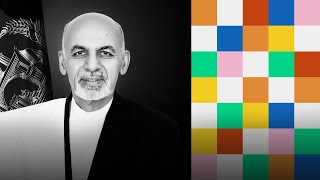
Mohammad Ashraf Ghani grew up in Afghanistan before pursuing his education abroad. Like so many Afghans, foreign invasion and civil war led to the persecution of his family and forced him to remain in exile. Whilst abroad, he became a leading scholar of Political Science and Anthropology and then worked at the World Bank where he learned the tools of international development. Following the fall of the Taliban in 2001,he returned to Afghanistan to devote his unique skills and knowledge to rebuilding the country. He advised interim President Karzai and served as the Finance Minister in the Transitional
Islamic State of Afghanistan until December 2004.
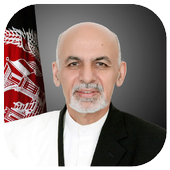
Dr. Mohammad Ashraf Ghani
Ashraf Ghani
Ashraf Ghani Ahmadzai
President of Afghanistan
Abdullah Abdullah
جمهوررئیس محمد اشرف غني
During his tenure as Finance Minister, he designed a package of reforms and initiated several public investment programs that led to significant improvements in the livelihoods of ordinary Afghans across the country. He declined to join the newly elected Government in December 2004. However, he remained an influential voice in the political circles both in Afghanistan and abroad. He served as the chairman of the Transition Coordination Commission (TCC) in 2010 which was responsible for transferring authority from foreign to national troops. He resigned from TCC to run for president in October 2013. He was declared winner on September 22, 2014.
Early Life
Dr. Ghani was born into an influential family in Afghanistan in 1949, and spent his early life in the province of Logar. He completed his primary and secondary education in Habibia High School in Kabul. Growing up in Kabul under a monarchy, where his father worked in various senior capacities, he has been immersed in politics from his early days.
Education and Early Career
As a young man, Dr. Ghani travelled to Lebanon to attend the American University in Beirut, where he met his future wife, Rula, and earned his first degree in 1973. He returned to Afghanistan in 1974 to teach Afghan studies and Anthropology at Kabul University before winning a government scholarship to study for a Master’s degree in Anthropology at New York’s Columbia University. He left Afghanistan in 1977, intending to be away for two years.
When pro-Soviet forces came to power, most of the male members of his family were imprisoned and he was stranded in the US. He stayed at Columbia University and earned his Ph.D. there, with a doctoral thesis entitled ‘Production and domination: Afghanistan, 1747-1901’, and was immediately invited to teach at University of California, Berkeley (1983) and then at Johns Hopkins University (1983-1991). During this period, he became a frequent commentator on the BBC Dari and Pashto services, broadcast in Afghanistan.
International Career
In 1991, Dr. Ghani joined the World Bank as lead anthropologist, advising on the human dimension to economic programs. He served for 11 years, initially working on projects in East Asia, but moving in the mid-nineties towards articulating the Bank’s social policy and reviewing country strategies, conditionalities, and designing reform programs.
In 1996, he pioneered the application of institutional and organizational analysis to macro processes of change and reform, working directly on the adjustment program of the Russian coal industry and carrying out reviews of the Bank’s country assistance strategies and structural adjustment programs globally.
He spent five years in China, India, and Russia managing large-scale development and institutional transformation projects. Whilst at the World Bank, Dr. Ghani attended the Harvard-INSEAD and Stanford business school leadership training program.




9Apps 4.9