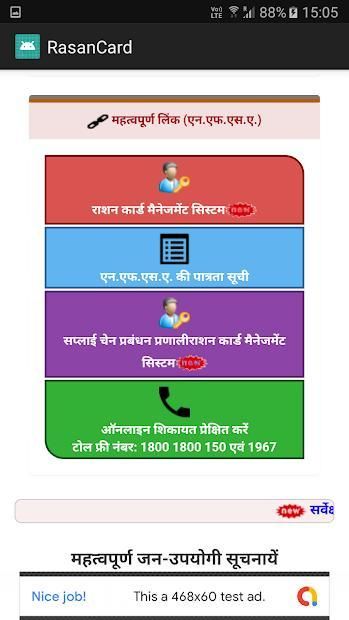
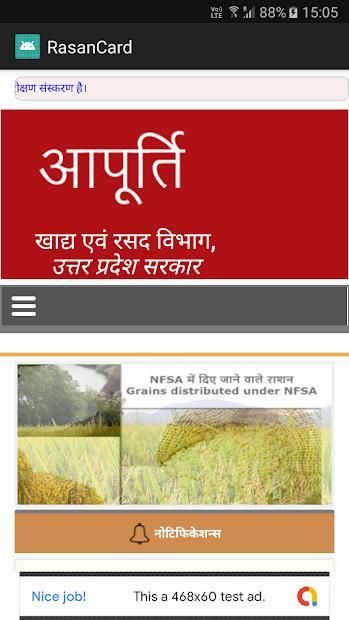
There's no denying the fact that 20,000+ users downloaded Rasan Card 2019 latest version on 9Apps for free every week! The App has powerful functions. This hot app was released on 2018-10-04. If you want it so go head and download it and enjoy your app.
Ration cards are an official document issued by state governments in India to households that are eligible to purchase subsidized food grain from the Public Distribution System (under the National Food Security Act). They also serve as a common form of identification for many Indians.
Under the National Food Security Act, all state governments in India have to identify households that are eligible for purchasing subsidized food grain from the Public Distribution System and provide them with ration cards. There are two types of ration cards under NFSA[2]:
Priority ration card - priority ration cards are issued to households that meet the eligibility criteria set by their state government. Each priority household is entitled to 5 kilograms of food grain per member.
Antyodaya (AAY) ration cards are issued to "poorest of poor" households. Each AAY household is entitled to 35 kilograms of food grain.
Before the NFSA was enacted, there were three types of ration cards[3]:
Above Poverty Line (APL) ration cards that were issued to households living above the poverty line (as estimated by the Planning Commission). These households received 15 kilogram of food grain (based on availability).
Below Poverty Line (BPL) ration cards that were issued to households living below the poverty line. These households received 25-35 kilograms of food grain.
Antyodaya (AAY) ration cards that were issued to "poorest of poor" households. These households received 35 kilograms of food grain.
राशन कार्ड भारत में राज्य सरकारों द्वारा जारी किए गए आधिकारिक दस्तावेज हैं जो सार्वजनिक वितरण प्रणाली (राष्ट्रीय खाद्य सुरक्षा अधिनियम के तहत) से सब्सिडी वाले खाद्य अनाज खरीदने के पात्र हैं। वे कई भारतीयों के लिए पहचान के एक आम रूप के रूप में भी काम करते हैं।
राष्ट्रीय खाद्य सुरक्षा अधिनियम के तहत, भारत की सभी राज्य सरकारों को उन परिवारों की पहचान करनी है जो सार्वजनिक वितरण प्रणाली से सब्सिडी वाले खाद्य अनाज खरीदने के लिए पात्र हैं और उन्हें राशन कार्ड प्रदान करते हैं। एनएफएसए [2] के तहत दो प्रकार के राशन कार्ड हैं:
प्राथमिकता राशन कार्ड - प्राथमिकता राशन कार्ड उन परिवारों को जारी किए जाते हैं जो उनकी राज्य सरकार द्वारा निर्धारित योग्यता मानदंडों को पूरा करते हैं। प्रत्येक प्राथमिकता परिवार प्रति सदस्य 5 किलोग्राम अनाज का हकदार है।
अंत्योदय (एएई) राशन कार्ड "गरीबों के गरीब" परिवारों को जारी किए जाते हैं। प्रत्येक एएई घर 35 किलोग्राम अनाज का हकदार है।
एनएफएसए लागू होने से पहले, तीन प्रकार के राशन कार्ड थे [3]:
गरीबी रेखा से ऊपर रहने वाले परिवारों को जारी किए गए गरीबी रेखा (एपीएल) राशन कार्ड से ऊपर (योजना आयोग द्वारा अनुमानित)। इन घरों को 15 किलोग्राम अनाज (उपलब्धता के आधार पर) मिला।
गरीबी रेखा से नीचे रहने वाले परिवारों को गरीबी रेखा (बीपीएल) राशन कार्ड के नीचे जारी किया गया था। इन घरों को 25-35 किलोग्राम अनाज मिला।
अंत्योदय (एएई) राशन कार्ड जो "गरीबों के गरीब" परिवारों को जारी किए गए थे। इन घरों को 35 किलोग्राम अनाज मिला।
Ration cards are an official document issued by state governments in India to households that are eligible to purchase subsidized food grain from the Public Distribution System (under the National Food Security Act).




9Apps 4.9