
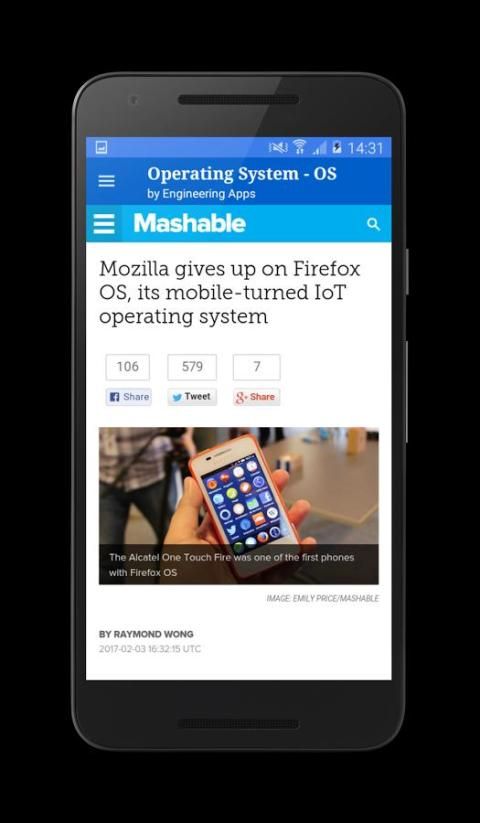
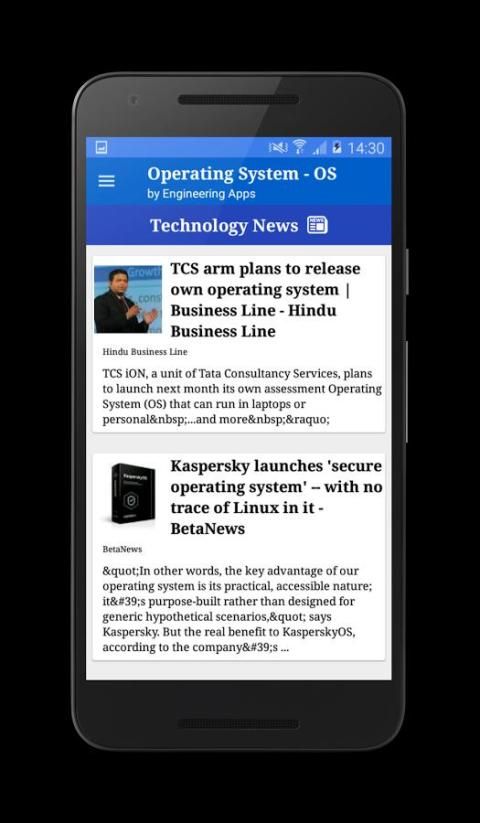
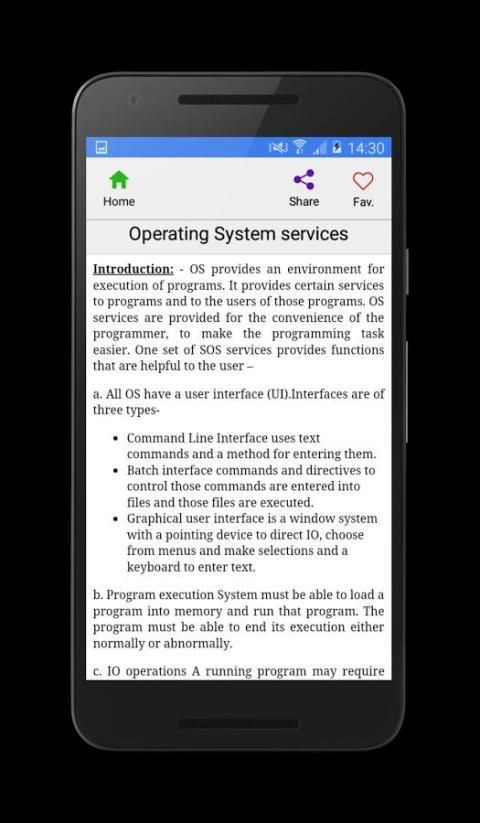
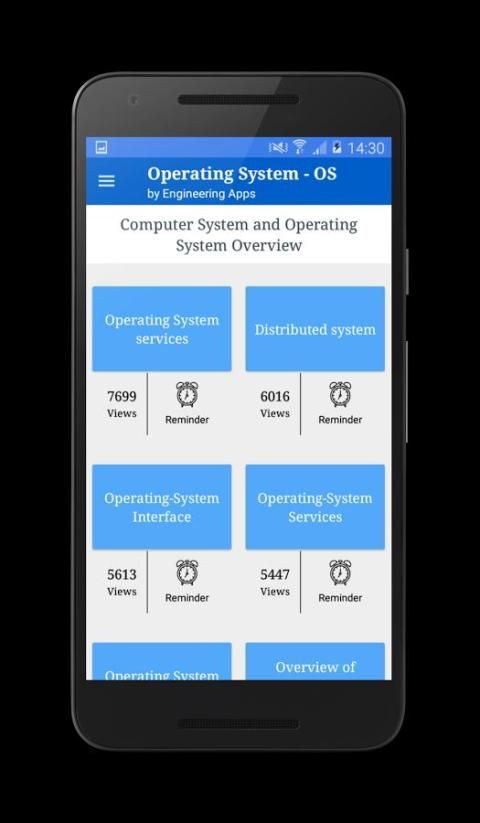
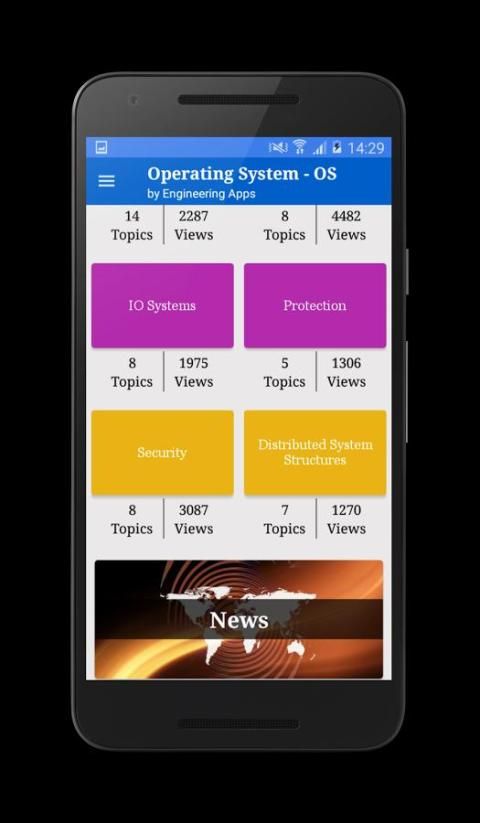
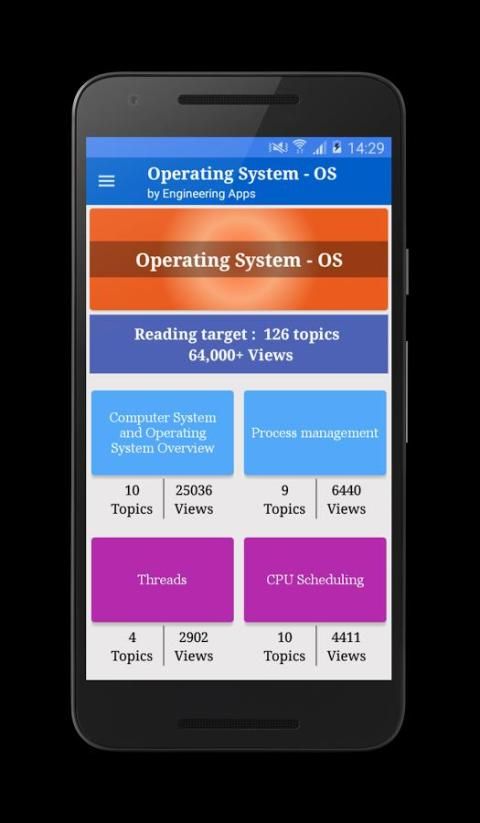
This unique free application is for all students of Operating Systems across the world. It covers 126 topics of Operating Systems in detail. These 126 topics are divided in 14 units. Each topic is around 600 words and is complete with diagrams, equations and other forms of graphical representations along with simple text explaining the concept in detail. The USP of this application is "ultra-portability". Students can access the content on-the-go from any where they like. Basically, each topic is like a detailed flash card and will make the lives of students simpler and easier. Some of topics Covered in this application are: 1. Overview of computer operating systems 2. Computer System Organization 3. Operating System Structure 4. Distributed system 5. Operating System services 6. System Calls 7. System Programs 8. Operating System Generation 9. Operating-System Services 10. Operating-System Interface 11. Process Management 12. Process Control Block 13. Schedulers 14. Context switch 15. Operations on Processes 16. Interprocess Communication 17. Sockets 18. Remote Procedure Calls 19. Remote method invocation 20. Threads 21. Scheduling Criteria 22. Scheduling Algorithms 23. Multithreading Models 24. Thread Libraries 25. Threading Issues 26. CPU scheduling 27. Multiple-Processor Scheduling 28. Symmetric Multithreading 29. Thread Scheduling 30. Solaris Scheduling 31. Windows XP Scheduling 32. Linux Scheduling 33. Algorithm Evaluation 34. Process Synchronization 35. The Critical Section Problem 36. Synchronization Hardware 37. Semaphores 38. Classic problems of synchronization 39. Monitors 40. Atomic Transactions 41. Deadlocks 42. Deadlock Characterization 43. Methods for handling deadlocks 44. Deadlock Prevention 45. Deadlock Avoidance 46. Banker’s algorithm 47. Deadlock Detection 48. Recovery from Deadlock 49. Memory Management Strategies 50. Address Binding 51. Logical versus Physical Address Space 52. Dynamic Linking and Loading 53. Swapping 54. Contiguous Memory Allocation 55. Fragmentation 56. Paging 57. Hardware Support in paging 58. Shared Pages 59. Segmentation 60. Virtual memory 61. System libraries 62. Demand Paging 63. Copy-on-Write 64. Page Replacement 65. FIFO Page Replacement 66. Optimal Page Replacement 67. LRU Page Replacement 68. Enhanced Second-Chance Algorithm 69. Allocation of Frames 70. Thrashing 71. Working-Set Model 72. Page-Fault Frequency 73. Memory-Mapped Files 74. Shared Memory in the Win32 API 75. Allocating Kernel Memory 76. Slab Allocation 77. File Concept 78. File Operations 79. File Types 80. Directory Structure 81. Directory 82. File System Mounting 83. File System Structure 84. File System Implementation 85. Directory Implementation 86. Free Space Management 87. Recovery 88. Log-Structured File Systems 89. Network file systems 90. Network file systems protocol 91. Magnetic Disks 92. Disk Structure 93. Disk Attachment 94. Disk Scheduling 95. Disk Management 96. Boot Block 97. Bad Blocks 98. Swap-Space Management 99. I/O Systems 100. Polling 101. Direct Memory Access 102. Application I/O Interface 103. Kernel I/O Subsystem 104. Transforming I/O Requests to Hardware Operations 105. Streams 106. Performance 107. Protection 108. Access Matrix 109. Implementation of Access Matrix 110. Access Control 111. Language-Based Protection 112. The Security Problem 113. Malicious codes 114. System and Network Threats 115. Cryptography as a Security Tool 116. Authentication 117. Key Distribution 118. User Authentication 119. Firewalling to Protect Systems and Networks 120. Distributed System Structures 121. Types of Distributed Operating Systems 122. Distributed Operating Systems 123. Network Structure 124. Network Topology 125. Communication Protocols 126. Robustness


9Apps 4.9